

The sensor
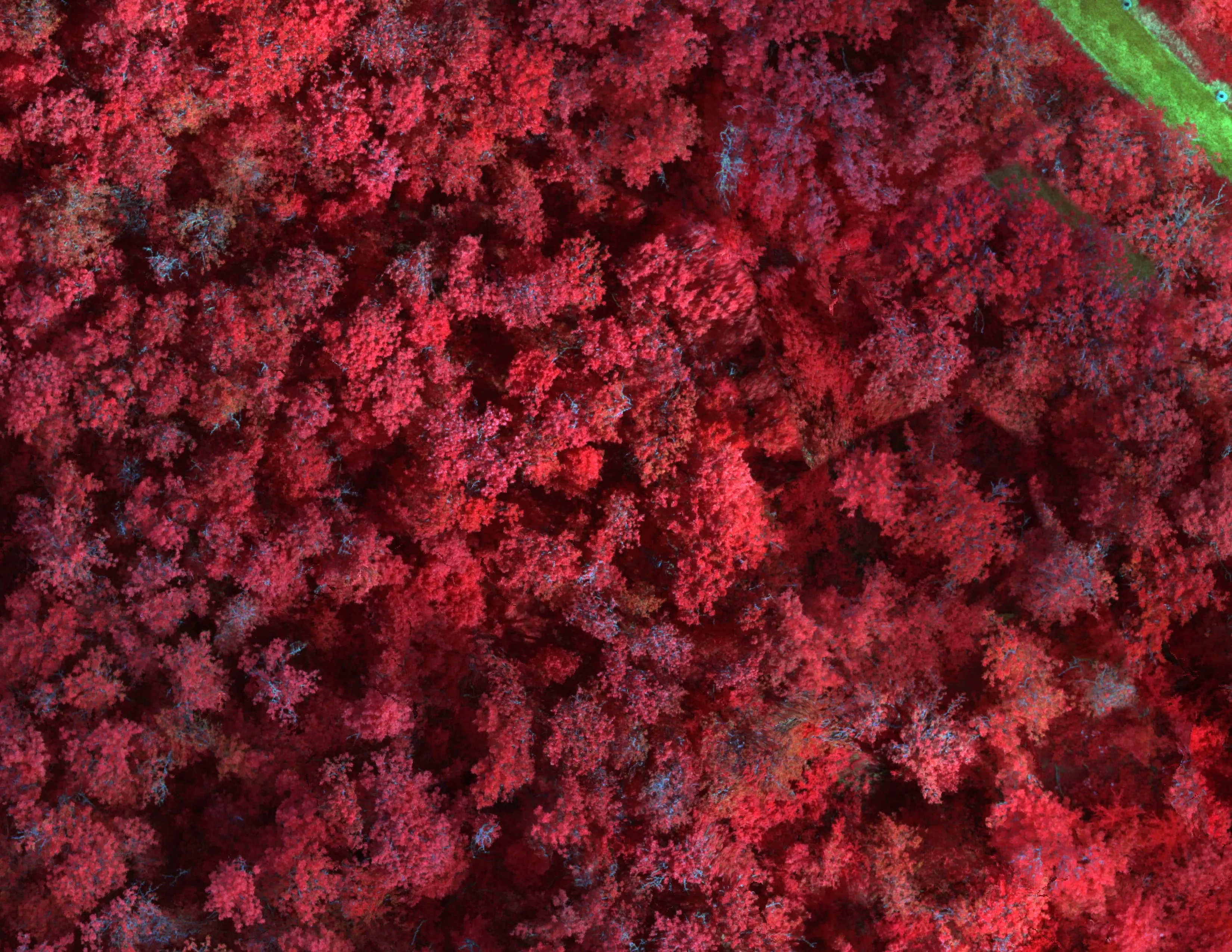
MicaSense RedEdge MX, five bands: blue, green, red, red edge, and near infrared. The DLS 2 light sensor and a reflectance panel calibrate every flight, so a value in May means the same thing as a value in October.
The indices
NDVI, GNDVI, NDRE, and red edge senescence indices, plus the raw bands and texture measures. The right index depends on the question. Chlorophyll stress shows up in the red edge long before it shows up in green.
Classification, with the number attached
Species and health models are trained on trees a person checked on the ground and validated on points the model never saw. The Eugene ash model runs in R with ranger random forests and leakage free repeated cross validation. We report overall accuracy with sensitivity and specificity, and we publish the confusion matrix. If a class is weak we say which one. On the Eugene Oregon ash inventory the fall senescence flight roughly doubled ash detection, from a sensitivity of 0.21 to 0.53, so any ash project gets a fall flight.
When to fly
Leaf color change separates species that look identical in summer. Morning versus afternoon changes a thermal read. We set flight dates by the biology: leaf on, leaf off, senescence, and time of day.